
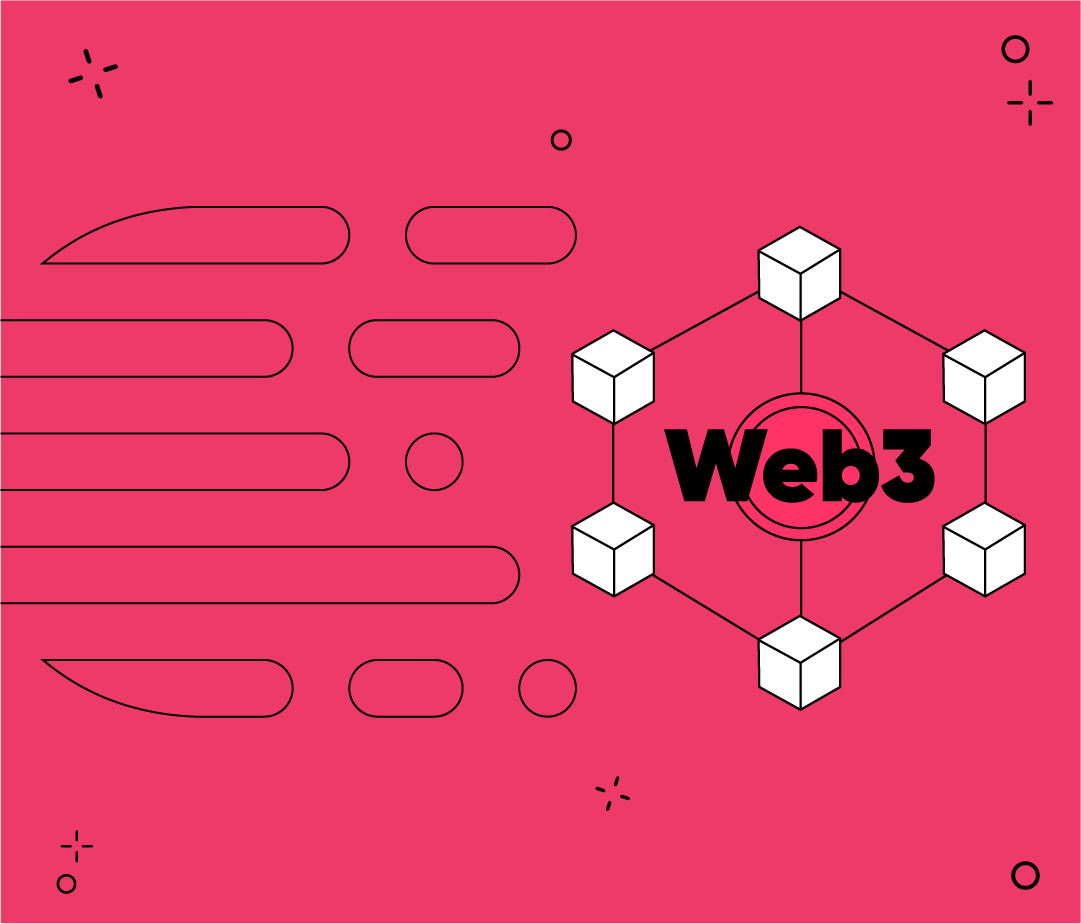





Web3 is the next step in the evolution of the Internet. With a focus on the user, digital identity, and data awareness, it is seen as a defining factor in financial innovation for years to come .
At the heart of this transformation is Blockchain, a technology that returns power to the user through decentralization . The processing of information no longer depends on a central entity, but rather nodes around the world validate, record, and process data, which no longer depends on the decision of a few. In this way, communities regain power.
Along with blockchain, smart contracts are another fundamental pillar of Web3. These self-executing programs eliminate the need for intermediaries, providing transparency and security . Through the use of smart contracts, transactions are automatically executed once set conditions are met, preventing potential manipulation.

Together, Web 3, blockchain, and smart contracts are driving socio-economic change, enabling users to take back control of their data and create a fairer and safer digital environment.
The evolution of the Internet
The constant evolution of the Internet over the years has given rise to Web 3. However, it was Web 1.0, developed between 1990 and 2004, that marked the first phase of this transformation. Before its advent, there were limited networks such as ARPANET, used exclusively by governments, universities, and the military sector. Web 1.0 was characterized by being "read-only", a space where users could access information like in a library, without the possibility of interaction or modification.
In 2004, Web 2.0 emerged, bringing with it a revolution: the active participation of users. It not only enabled the creation and sharing of content but also opened the door to personalization and social networks. However, Web 2.0 also introduced a critical problem: centralization.

Large platforms began to collect user data and depend on centralized servers for their operations, which resulted in a loss of control over digital identity and privacy.
In response to these challenges, Web3 emerged. This new phase aims to return control over their identity and data to users, eliminating the need for centralized intermediaries.
What is Web 3.0?
*Web 3.0 is a decentralized Internet where applications do not depend on central servers or nodes*. In this version of the Web, users not only utilize platforms but also contribute their computing power to become servers or nodes, achieving true decentralization. This model is based on blockchain technology, which facilitates a more secure and collaborative network.
One of the main reasons for the emergence of Web 3.0 is the growing concern about the centralization of power on the Internet. As large companies began to dominate vast sectors of online information and services, the need for change became evident. This is where blockchain and cryptocurrencies come into play. Web3 envisions a system where users have greater control over their data and decisions, actively engaging, participating, and contributing. This new approach relies on technologies like blockchain, which powers decentralized applications and equitably distributes power among participants.
What is Blockchain?
*Blockchain is the technology that enables Web3. It allows data, including individual user transactions and balances, to be verified in a transparent and decentralized manner*.

To help visualize this, think of blockchain as a ledger, akin to a bank's transaction book, where transactions are logged into blocks, each recording multiple operations.
Moreover, it is important to clarify that there are multiple blockchains, each designed for specific purposes. For example, the Bitcoin blockchain primarily focuses on recording cryptocurrency transactions in a secure and transparent manner. Others, such as Ethereum, enable the creation of smart contracts, which automatically execute agreements when certain conditions are met.
Despite their differences, these blockchains share the same technological foundation: decentralization and security through cryptography, which ensures that stored data is immutable and only accessible to those with the appropriate permissions.
Subscribe to our newsletter
Immerse yourself in the world of technology with a human touch.
Features of the Blockchain
- *Transparent*: In the Bitcoin blockchain, each block is created approximately every 10 minutes and can contain about 2,100 transactions. This data is stored in a public database, allowing anyone to view all recorded transactions, not just their own. This level of transparency is unprecedented in financial systems, enabling complete traceability of transaction paths.
- *Pseudonymous*: Each user is identified by a unique alphanumeric code, akin to a bank account number, but without disclosing their real identity. This setup enhances privacy.
- *Decentralized*: No single entity controls the blockchain; instead, its functions are distributed among all users. This decentralized structure is facilitated by the peer-to-peer (P2P) system, where each user acts as a node, capable of sharing and storing information, similar to applications like Torrent.
Why Blockchain is impossible to forge
The security of the blockchain is based on the use of unique identifiers called hashes. These are fingerprints for each block that contains transactions. Each new block uses the hash from the previous block to generate its own, creating a chain of interconnected blocks. This means that if someone tried to alter a transaction in one block, they would need to modify all subsequent blocks, which is virtually impossible due to the enormous computing power required.
To ensure that transactions are legitimate, the Bitcoin blockchain uses a mechanism called proof of work. Miners must solve a complex mathematical problem, finding a random number called a "nonce" that allows a new hash to be generated. This process, known as mining, ensures that each block is closed approximately every ten minutes. This makes any attempt at forgery extremely difficult and costly.

Although there are other faster blockchains, such as Solana, which can process up to 400,000 transactions per second, Bitcoin's approach prioritizes security and decentralization. Increasing the speed of transactions would require more computing power, which could compromise the participation of ordinary users and, consequently, decentralization.
Web3 facilitated the creation of smart contracts
Bitcoin can be considered "smart money" because of smart contracts. In 2015, Vitalik Buterin, in his 20s, realized that the revolutionary features of Bitcoin could be applied not only to money but to all kinds of information. Thus, he created Ethereum.
Ethereum's main technological breakthrough is smart contracts: encrypted programs that run themselves when certain pre-defined conditions are met. In this way, actions that previously depended on third-party servers are now performed autonomously.
Smart contract features
- *Immutable*: Once programmed, a smart contract cannot be altered. The program interprets the code in only one way. The code does not lie; once programmed, it cannot be modified, and if changes are needed, a new contract must be created.
- *Transparent*: By utilizing blockchain technology, all information related to the contract is visible and accessible to those with access to the network.
- *Secure*: Smart contracts inherit the security infrastructure of the blockchain, ensuring protection and reliability.
Challenges in adopting Blockchain technology
Despite the numerous advantages offered by Web 3 and blockchain technology, such as decentralization, transparency, and security, its adoption has encountered resistance across various sectors. Scalability remains a major point of contention.
Although networks like Bitcoin and Ethereum have proven secure, there are still challenges in processing large volumes of transactions efficiently and at a low cost. Moreover, the technical complexity of these solutions can be overwhelming for those not familiar with the technology, posing barriers to widespread adoption.

Another concern is the uncertain regulatory environment in many countries, which casts doubt on the legality and security of blockchain transactions. There is also a perception that decentralization could facilitate anonymity and the misuse of technology for illegal activities.
However, it is crucial to note that these concerns are not insurmountable. The industry is rapidly advancing scalability solutions, such as sidechains and more efficient consensus mechanisms. Furthermore, the regulatory framework is evolving to provide greater clarity and protection for both businesses and users.
Conclusion
Web3 represents an evolution toward a decentralized Internet that redefines the way we interact with technology and opens up a new marketplace of entirely different business paradigms, where the focus is not on the product, but on the user. By decentralizing control and eliminating intermediaries, blockchain and smart contracts protect sensitive data and secure transactions without relying on a central authority. This not only gives power back to the user, but also opens the door to new forms of social and economic organization.
At Crombie, we believe these solutions represent an opportunity for companies to adopt disruptive technologies that will positively change the business landscape and pave the way for a more secure, efficient and transparent future.
Want to innovate with Web3 and Blockchain?
From the creation of digital wallets to the implementation of smart contracts, we help scale innovative ideas in an agile and reliable environment.
Frequently Asked Questions About Web3, Blockchain, and Smart Contracts
Web3 Concepts and Evolution
Web 3.0 is the decentralized evolution of the internet based on blockchain technology, where users maintain direct control over their data, assets, and digital identity. Unlike Web 2.0, which is dominated by centralized servers and platforms that collect private information, Web3 uses peer-to-peer (P2P) networks and Smart Contracts to eliminate intermediaries and ensure operational transparency.
Blockchain is a distributed, immutable digital ledger where transactions are grouped into cryptographically secured blocks. It is impossible to falsify because each block includes the unique identifier (hash) of the previous block. To alter a record, an attacker would have to modify the history of the entire network simultaneously, which would require inaccessible levels of computing power.
The main characteristics include decentralization, public or permissioned transparency, pseudonymity, and data immutability. In enterprise environments, blockchain architecture enables organizations to audit transactions in real time, authenticate digital assets, and execute automated processes without relying on centralized validation authorities.
A Smart Contract is a self-executing computer program stored on the blockchain that is automatically triggered when predefined conditions are met. By eliminating human intervention and traditional intermediaries, Smart Contracts ensure that business agreements are executed transparently, securely, and without room for ambiguous interpretations.
The Bitcoin blockchain was designed primarily as a secure, decentralized ledger for transferring financial value. Ethereum, on the other hand, introduced the ability to execute Smart Contracts and decentralized applications (dApps), making it possible to program complex business logic on the blockchain.
Decentralization improves security by eliminating the single point of failure characteristic of centralized servers. By distributing information across multiple independent nodes, businesses mitigate the risk of large-scale cyberattacks, data breaches, and unauthorized manipulation of their operational records.
Architecture, Integration, and Scalability
Blockchain can be integrated through decoupled API architectures and middleware layers that connect distributed network nodes with a company’s banking core, ERP, or CRM. Specialized engineering companies like Crombie design custom microservices that make it possible to access on-chain data without having to restructure the entire legacy infrastructure.
The main challenges include transaction confirmation latency, gas costs (network fees), and the high resource consumption associated with traditional consensus mechanisms. To address these challenges, businesses adopt Layer 2 solutions, sidechains, and permissioned networks optimized for high transaction throughput.
Regulatory compliance is ensured by auditing Smart Contract source code before deployment and embedding risk rules, verified identities (KYC/AML), and governance parameters directly into the system logic. This ensures that automation complies with financial regulations and international data protection standards.
A custom solution makes sense when operations require commercial data privacy, proprietary hardware integrations, or compliance with specific business rules that public protocols cannot accommodate. Custom development on permissioned networks ensures intellectual property ownership and full control over transaction costs.
Decentralized digital identity allows users and businesses to authenticate credentials, access, and digital signatures without handing over their data to third parties. This streamlines onboarding processes, reduces identity fraud, and simplifies compliance with privacy regulations and standards such as GDPR and ISO 27001.
Open Finance and Web3 connect through decentralized payment rails and traceability protocols that convert traditional assets into programmable digital representations. This convergence enables instant cross-border payments, automated settlements, and access to global liquidity without operational friction.
Implementation, Costs, and Partner Selection
When choosing a development partner, businesses should evaluate its proven experience in Smart Contract security, cloud-native architectures (AWS), and its ability to integrate complex APIs.
Crombie ensures quality by running automated test coverage, static code analysis, and stress simulations on test networks (testnets). In addition, every software and AI development project follows the Spec-Driven Delivery standard, ensuring that the program’s behavior strictly follows the specifications validated by the client.
Crombie offers blockchain network architecture, Smart Contract development and auditing, financial API integration, asset tokenization, and cloud infrastructure for Web3 projects. Our engineering approach transforms disruptive concepts into real operational capabilities for the Fintech, Retail, and Industrial sectors.

0 comments
·
12 min Read