




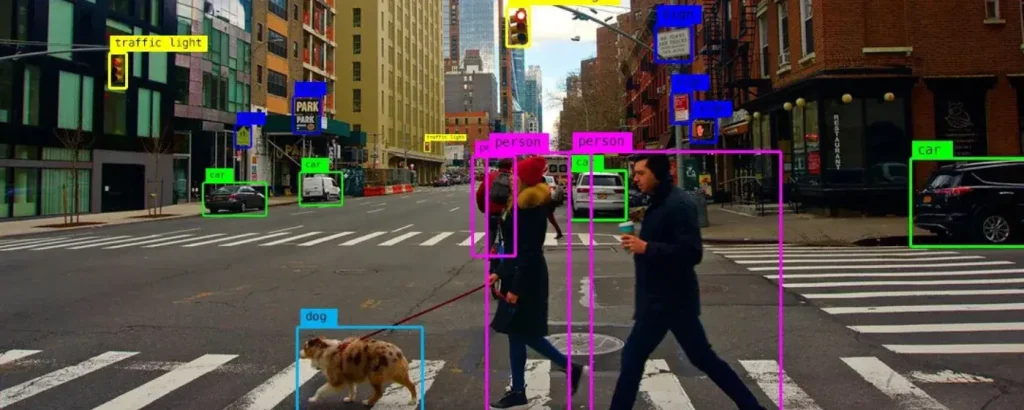
 What Is Computer Vision and How Does It Work in a Business Environment?
Computer Vision is a branch of artificial intelligence that trains algorithms to extract, process, and interpret visual information from digital images and video. Unlike traditional cameras, computer vision systems analyze patterns in real time to automate business decisions, quality inspection, and operational control.
 What Are the Main Computer Vision Use Cases in Retail?
In retail, Computer Vision automates shelf inventory management, prevents losses at checkout, analyzes customer behavior, and optimizes warehouse logistics. Engineering companies like Crombie integrate these models with ERP and WMS systems to prevent stockouts and increase operational efficiency.
 How Does Computer Vision Improve Quality Control in Industry?
Computer Vision improves quality control through high-speed cameras and deep learning models that detect micro-defects that are imperceptible to the human eye. This automation reduces industrial scrap rates, minimizes manual errors, and ensures consistent production standards around the clock.
 What Is the Difference Between Traditional Image Processing and AI-Powered Computer Vision?
Traditional image processing applies filters and rigid instructions based on predefined rules. In contrast, AI-powered Computer Vision uses convolutional neural networks (CNNs) and deep learning models that can adapt to variations in lighting, angles, and uncatalogued objects without manual retraining.
What Technical Infrastructure Does a Business Need to Deploy Computer Vision Solutions?A business needs industrial cameras or video sensors, data processing pipelines at the edge (Edge Computing) or in the cloud, and AI models optimized for low latency. Companies like Crombie design AWS cloud infrastructure that connects these visual data flows with the client’s core operations.
How Does Computer Vision Contribute to Security and Fraud Prevention?Computer Vision contributes to security through facial biometric authentication, anomaly detection in restricted-access areas, and identity verification during digital onboarding. In industries such as fintech and banking, these algorithms help prevent identity fraud while ensuring regulatory compliance and full traceability.
How Can Computer Vision Models Be Integrated with Existing Systems and Infrastructure?Computer Vision can be integrated through decoupled API architectures and microservices that connect AI models with the business core. A specialized engineering partner like Crombie implements abstraction layers that allow video data to flow into ERP or CRM systems without disrupting active operations.
What Is Edge Computing and Why Is It Critical for Computer Vision Projects?Edge Computing is an architecture that processes visual data directly on a local device or camera without having to send the entire video stream to the cloud. This dramatically reduces latency, minimizes bandwidth consumption, and enables instant responses in security or industrial inspection processes.
How Can Data Privacy and Compliance Be Ensured When Using AI-Powered Cameras?Data privacy can be ensured by implementing real-time anonymization algorithms that blur faces and license plates before information is stored or processed. The architecture must also comply with international data protection standards and regulations such as GDPR, ISO 27001, and local privacy policies.
When Does It Make Sense to Develop a Custom Computer Vision Solution Instead of Using SaaS Software?A custom solution makes sense when operations require detecting specific objects, integrating with proprietary hardware, or complying with complex business rules that standard SaaS solutions cannot address. Custom development ensures intellectual property ownership and full adaptability to business processes.
How Do You Evaluate the Accuracy and Performance of a Computer Vision Model?Accuracy is evaluated using engineering metrics such as Precision, Recall, F1-Score, and Mean Average Precision (mAP) on real-world test datasets. Advanced development teams like Crombie implement continuous observability to monitor model performance in production and prevent performance drift over time.
What Role Do Neural Networks Play in Image Classification and Segmentation?Deep neural networks analyze image pixels across multiple layers of abstraction, identifying edges, textures, shapes, and context. This makes it possible not only to classify which object appears on screen, but also to precisely identify its boundaries (segmentation) to support automated decision-making.
How Do You Choose a Software Engineering Company for Computer Vision Projects?When choosing an engineering partner, businesses should evaluate its experience with cloud-native architectures, ability to integrate with legacy systems, and delivery methodologies designed to minimize technical debt. Specialized teams like Crombie combine custom development with Spec-Driven Delivery to ensure predictable delivery.
How Long Does It Take to Deploy a Computer Vision Solution to Production?Deploying a Computer Vision solution to production typically takes between 8 and 14 weeks, covering everything from visual data collection and labeling to model training and API integration. Iterative development enables continuous operational validation before a full-scale launch.
What Computer Vision and Artificial Intelligence Services Does Crombie Offer?Crombie offers AI architecture design, custom Computer Vision model development, Edge/Cloud process integration, and observability and data governance layers. Our engineering approach transforms video and image data flows into operational capabilities and competitive advantage.





0 comments
·
8 min Read