




Integrating Artificial Intelligence into security forces companies confronts an uncomfortable reality: the browser is no longer an environment controlled by humans. For years, technical teams have operated under the basic assumption that behind every web session there is a human user—someone who reads the page, processes the information, evaluates whether something looks suspicious, and makes conscious decisions before clicking.
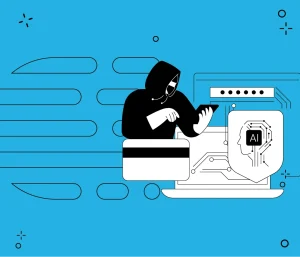
AI agents changed the rules of the browser. Not because they introduced entirely new vulnerabilities. In fact, phishing, malicious extensions, and session hijacking existed long before generative AI became a commercial reality. What changed is that AI removed the assumption of human oversight that supported the entire web security architecture.
The Browser: An Operational “Black Box”
The modern browser is, by design, an operational black box. Between the moment a user clicks a link and the moment they submit a form, hundreds of processes occur that no IT team can directly observe: JavaScript execution, cookie updates, browser extensions interacting, and automatic redirects.
This opacity is not new. It has been inherent to the browser model for more than two decades. Phishing kits, compromised extensions, and session manipulation attacks have always exploited this gray area.
What changed is not the attack surface itself. What changed is the speed and scale at which malicious actors can interact with that surface.

AI Agents Execute Without Hesitation
A human user evaluates a webpage using non-technical judgment: “Does this URL look suspicious?”, “Why is it asking for my password again?”, “Should this button really be here?” These mechanisms were imperfect, but they functioned as a last line of defense.
An AI agent processes that same page without those intuitive barriers. It can navigate, complete forms, download files, and authorize transactions based on programmed patterns. And it can do so in seconds—not minutes.
The problem is not that AI is more sophisticated than humans at detecting deception. The problem is that AI does not detect deception at all. It simply executes.
The Question Redefining the Security Perimeter
Traditionally, web security audits asked: “What decision did the user make?” Post-incident forensics relied on reconstructing click flows, completed forms, and downloaded files to understand how the compromise occurred.
Today, the question is different: “A decision was made. Who made it?”
Because when an AI agent navigates a compromised web session, traditional logs will show activity that appears completely normal: correctly completed forms, transactions authorized with valid credentials, and files downloaded from seemingly legitimate URLs. The difference is that there was never a moment of human evaluation.
How Security and IT Teams Must Address These Challenges
This new reality forces IT and security teams to rethink their controls. Solutions that relied on warning users— “Are you sure you want to download this file?”
“This page is not secure.” —lose effectiveness when the “user” is an automated agent that processes those warnings as ignorable text.
The defense approaches that remain effective in this context are those operating at the infrastructure level—not the interface level:
- Real-time context validation: Detect navigation patterns that do not align with expected human behavior, regardless of whether the clicks appear “normal.”
- Granular segmentation: Limit what a specific web session can do, even when it has been correctly authenticated.
- Continuous integrity monitoring: Verify that transactions and state changes match documented approval workflows.

AI Forces a Rethink of the Attack Surface
The industry will be forced to evolve beyond “user education” models and toward controls that assume the browser may be operated by a non-human agent at any moment.
This is not simply another technical problem to solve. It is a paradigm shift in how trust is defined within web environments. Organizations that adapt to this reality first will gain a significant operational advantage over those that continue relying on human users as the last line of defense.
AI did not break web security. It only exposed a fragility that had always been there.







0 comments
·
4 min Read